Endpoint Security • JUN 29, 2026
Shadow IT in the Era of Remote Work: Securing the Unseen Attack Surface
We used to define Shadow IT as an unauthorized SaaS app purchased on a corporate credit card. In 2026, the definition has expanded dramatically. The permanent adoption of remote and hybrid work has blurred the lines between hardened corporate networks and deeply insecure home environments, creating an attack surface that IT has virtually zero visibility into.
The Home Network Bridge
The traditional VPN was designed to create a secure tunnel between a trusted endpoint and the corporate network. But what happens when that “trusted” endpoint is sitting on a deeply compromised home Wi-Fi network?
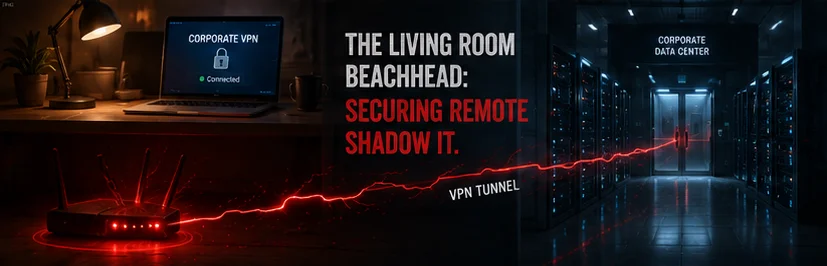
Threat actors are increasingly targeting consumer-grade networking gear to pivot into corporate environments. A stark example earlier this year was the massive resurgence of the Mirai botnet, which actively exploited unpatched, end-of-life D-Link home routers. When a remote employee connects their corporate laptop to a compromised home router, attackers can execute local man-in-the-middle attacks, capture authentication tokens, or move laterally onto the corporate device, essentially using the employee’s living room as a beachhead into the enterprise.
The Consumer GenAI Threat
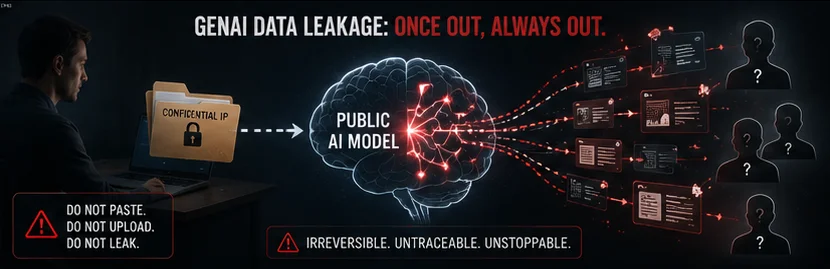
The other massive blind spot in modern Shadow IT is the unauthorized use of consumer-grade Generative AI. Employees, driven by immense productivity demands, are routinely feeding highly sensitive corporate data—source code, financial projections, unreleased product specs—into public LLMs to summarize, format, or debug.
This data is ingested into the model’s training set, effectively leaking proprietary intellectual property into the public domain. Security teams cannot secure data they don’t know is leaving the endpoint.
Regaining Visibility and Control
Securing the remote workforce requires acknowledging that the home network will always be hostile territory.
Endpoint Isolation: Implement strict split-tunneling policies and robust host-based firewalls that completely isolate the corporate device from other unmanaged devices on the employee’s local network (like infected smart TVs or IoT devices).
Deploy Cloud Access Security Brokers (CASB): To combat GenAI data leakage, organizations must route web traffic through a CASB or Secure Web Gateway (SWG). This allows IT to monitor and block the upload of sensitive data to unapproved, consumer-grade AI platforms.
Zero Trust Network Access (ZTNA): Replace legacy VPNs with ZTNA architectures. ZTNA continuously verifies the security posture of the endpoint—checking for updated OS patches, active EDR, and secure configurations—before granting access to specific internal applications, regardless of how insecure the physical network is.
You cannot control the security hygiene of an employee’s home network, but you can absolutely control how your corporate data behaves when it gets there.