Attack Surface Management • MAR 09, 2026
The Danger of Legacy Data: What the LexisNexis Breach Teaches Us About Deprecated Servers
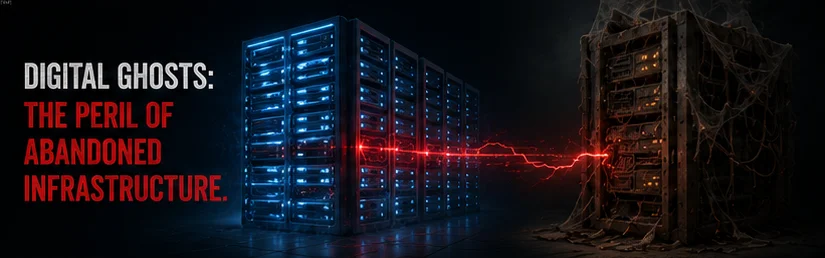
In the rush to migrate to modern cloud architectures, organizations frequently leave ghosts behind. These digital ghosts—forgotten, unpatched servers and deprecated applications—are becoming the preferred hunting ground for initial access brokers. The 2026 breach of LexisNexis serves as a textbook example of how devastating legacy infrastructure can be when left exposed to the public internet.
The Anatomy of a Forgotten Server Breach
Enterprises rarely decommission infrastructure cleanly. A marketing team launches a temporary sub-domain for a campaign, an engineering team spins up a staging environment for an API, or a legacy database is replaced but left running “just in case” we need historical records.
Years later, the engineers who built these systems have left the company. The servers fall off the active IT asset inventory. They stop receiving security patches. In the LexisNexis incident, attackers didn’t need to burn a highly sophisticated zero-day exploit to breach the perimeter. They simply found an internet-facing, deprecated server running outdated software that the company had completely forgotten existed.
The Legacy Data Goldmine
The danger isn’t just the server itself; it’s what the server connects to. Deprecated servers often retain hardcoded credentials, stale API keys, or direct routing paths to core databases that should have been severed years ago.
Furthermore, companies often fail to securely destroy the data residing on these legacy systems. Attackers routinely breach a forgotten staging server only to find massive, unencrypted dumps of production customer data that were used for testing five years prior. The threat actor gets a free pass to millions of records without ever touching the primary, heavily defended cloud environment.
Eradicating Digital Debt
Securing the modern enterprise requires aggressively hunting down and eliminating legacy debt.
Continuous Attack Surface Management (ASM): You cannot rely on static asset spreadsheets. Deploy automated tools that continuously scan the public internet from an attacker’s perspective, mapping every exposed IP, subdomain, and open port associated with your organization.
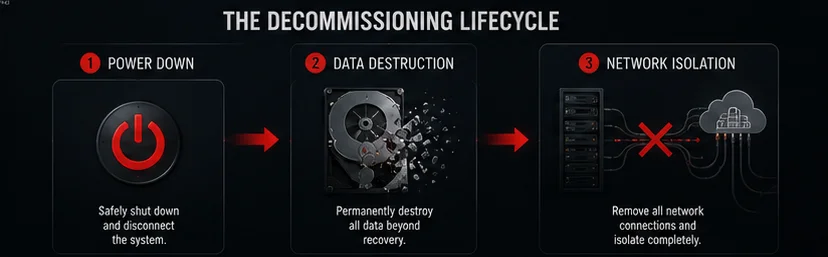
Ruthless Decommissioning: Create strict, enforced protocols for end-of-life systems. Decommissioning a server doesn’t just mean turning it off; it means securely wiping the drives, destroying associated service accounts, and revoking any network firewall rules that allowed it to communicate internally.
Zero Trust for Internal Networks: Just because a legacy server is internal doesn’t mean it should have unrestricted access to the modern environment. Implement micro-segmentation so that even if a forgotten server is compromised, the attacker cannot pivot to the core network.
Leaving a deprecated server online is the equivalent of abandoning a house, but leaving the front door wide open and the master keys to your new home on the kitchen counter.